

Children's Book Illustrator Guide: Find the Right Artist for Your Kids' Book
Think about your favorite childhood book. What do you remember most? Is it the exact words on the page, or is it the vibrant, magical images that brought the story to life? That, right there, is the magic of a children's book illustrator.
They're so much more than just artists. They are visual storytellers, dream-weavers, and your creative co-pilot on the journey to creating a book. They take your manuscript and breathe life into it, creating the characters, the world, and the entire feeling of a story through pictures. For a young reader, those illustrations aren't just decorations; they are the story.
What a Childrens Book Illustrator Really Does
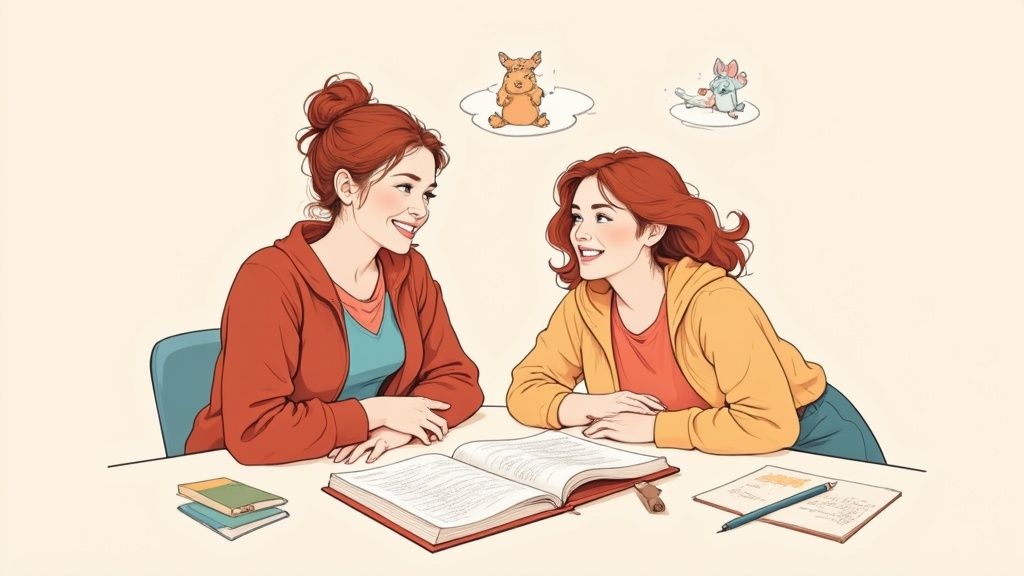
Let's use an analogy. If you're the author, you've written the script for a movie. The illustrator? They're the director, the set designer, the costume department, and the casting director all rolled into one. They make the crucial decisions that shape how a child will see and feel your story.
Their job goes way beyond just drawing what the words say. A truly fantastic illustrator adds whole new layers of meaning and emotion. They sneak in little details for kids to discover, hint at what's coming next, and build a consistent visual world that feels totally real and incredibly inviting.
The Heart of the Story
This is where the real enchantment happens. A great illustrator doesn't just draw a "sad" character because the text says so. They capture the feeling of sadness—the slump of the shoulders, the way the light hits a single tear, or the gloomy, muted colors of the background. It's this emotional connection that makes illustrations so incredibly powerful for kids.
Here's what a professional illustrator really brings to the table:
- Character Development: They design characters that are so full of personality they feel like real friends. More than that, they make sure that character looks consistent from the first page to the last, from every single angle.
- World-Building: From a messy, cozy bedroom to an enchanted, sparkling forest, they build the entire universe of your book. They make it a place a child will want to explore over and over again.
- Pacing and Flow: A skilled illustrator is a master of rhythm. They know exactly when to use a massive, full-page spread for a "wow" moment and when to use a sequence of smaller spot illustrations to show quick action.
The right illustrator can elevate a good story into a cherished, unforgettable experience. Their art is often why a child first pulls a book off the shelf and why they beg to have it read every single night.
Honestly, choosing your creative partner is probably the biggest decision you'll make for your book. It shapes everything from how much kids connect with the story to its lasting impact. To dive deeper into what makes pictures so powerful, take a look at our guide on the role of illustrations in children's picture books.
Finding Your Book's Visual Heartbeat
Every story has a soul, and the illustration style is what makes it sing. Think of yourself as a film director for a moment. Would you shoot a quiet, emotional drama with the same wild, fast-paced camera work you'd use for an action-comedy? Of course not! The same goes for your book. You’re not just picking pretty pictures; you’re choosing the visual language that will whisper—or shout—your story to a child.
So, let's look at your manuscript. Is it a sweet, lyrical bedtime story? Maybe a soft, dreamy watercolor style is what you need to give it that cozy, tucked-in feeling. Or is it a bonkers, laugh-out-loud adventure filled with zany characters and silly antics? In that case, you'll want a bold, digital cartoon style with high-energy colors that practically jump off the page.
A World of Artistic Styles
The world of a children's book illustrator is a glorious, sprawling landscape of creativity. There are so many different artistic paths to take, and each one creates a completely different experience for the reader.
Here are a few popular styles to get your wheels turning:
- Traditional Watercolor and Gouache: This is the classic, timeless look. Think soft edges, gentle colors, and a warm, nostalgic vibe. It’s absolutely perfect for stories about nature, heartfelt moments, and anything that needs a touch of classic charm.
- Bold Digital Cartoon: This style is all about energy! We're talking clean lines, super-bright colors, and characters with over-the-top expressions. It’s a fantastic choice for funny, action-packed stories that are all about fun.
- Mixed-Media and Collage: Ready to get inventive? This approach mixes drawing, painting, paper cutouts, and sometimes even bits of photography to build fascinating, textured worlds. It's brilliant for quirky, imaginative stories that celebrate creativity itself.
The real magic happens when the style doesn't just decorate the words but actually amplifies them. The art should feel like it was born from the story, making the whole experience richer and unforgettable.
Matching Your Story’s Vibe to the Art
Right now, the industry is buzzing with new and exciting trends. Illustrators are experimenting like never before, and styles like minimalist naïve art and deeply expressive work now account for over 50% of new commissions. It’s a huge shift! In fact, hybrid digital-handmade styles now dominate 70% of projects because they offer beautiful, rich textures for printing but can also cut production time by up to 30%. If you're curious, you can discover more insights about these illustration trends and see what's really grabbing kids' attention today.
Let’s zero in on two of these exciting approaches:
- Naïve or Childlike Art: This style is pure charm. It uses simple shapes and a wonderfully "imperfect" perspective that looks like it could have been drawn by a child. This creates an instant connection with young readers and is perfect for stories about imagination, playtime, and seeing the world through a kid’s wonderfully unfiltered eyes.
- Emotionally Expressive: Here, it’s all about the feels. This style cares less about perfect anatomy and more about capturing a character's inner world through fluid lines and evocative colors. It's an incredible tool for stories that explore big emotions—like shyness, jealousy, or courage—helping kids see and understand feelings in a powerful, visual way.
So, How Does the Magic Happen? A Look Inside the Illustrator's Workflow
Ever wonder how your manuscript goes from a simple Word document to a vibrant, page-turning adventure? It’s not exactly magic, but it is a wonderfully collaborative process with your children's book illustrator. Getting a handle on this journey is your secret weapon for a smooth partnership, helping you set realistic expectations and give the right feedback at the right time.
It all kicks off with a creative brief. This is your moment to pour out your vision—the story's mood, the quirky personalities of your characters, and any specific visual ideas you've been dreaming up. Think of it as sitting down with your movie director to talk through the script before they ever shout, "Action!"
This simple visual breaks down the first big steps: connecting your story to the perfect artist.
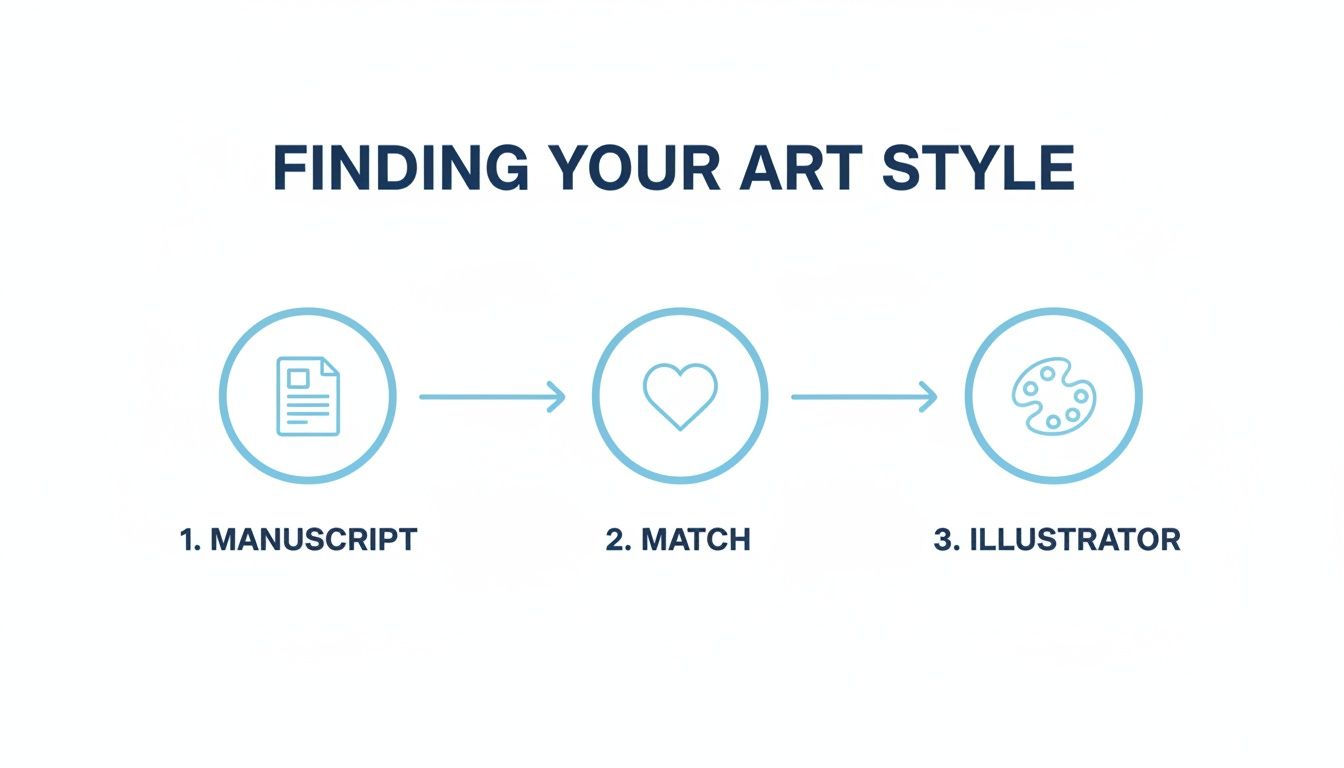
As you can see, everything flows from your manuscript. Once your story is solid, you can find a style that fits and then bring an illustrator into the creative process.
From Rough Scribbles to Polished Masterpieces
Okay, so the brief is locked in. Now the real fun begins! The illustrator will dive headfirst into the initial sketching phases, and this is where your story truly starts to get its legs. Your input here isn't just helpful—it's absolutely essential.
To give you a clearer picture, here's a step-by-step look at what you can expect when you hire a professional illustrator.
A Look Inside the Illustrator's Workflow
| Stage | What Happens | Your Role (The Author) |
|---|---|---|
| 1. Thumbnails & Storyboard | The artist creates tiny, super-rough sketches to map out the book's pacing and the layout of each page. It's all about flow and composition. | Review the overall story arc. Does the visual pacing feel right? Is the action clear? This is the high-level approval stage. |
| 2. Rough Sketches | Based on your feedback, the illustrator develops more detailed pencil sketches for the entire book. Characters and settings start taking shape. | This is your most critical feedback point! It's easy to erase a pencil line, but much harder to repaint a finished piece. Speak up now! |
| 3. Character Design | The illustrator finalizes the look of your main characters, often creating a "character sheet" with different angles and expressions for consistency. | Give the final "yes!" to your hero. Does the character feel authentic to your story? This is their final look. |
| 4. Color Studies | Sometimes, an artist will provide a few sample color versions of a single illustration to nail down the book's overall color palette and mood. | Choose the color direction that best captures the emotion of your story—warm and cozy, bright and energetic, or soft and dreamy? |
| 5. Final Art & Delivery | With all approvals in hand, the artist creates the final, polished, full-color artwork. This is where they add texture, light, and all the gorgeous details. | Sit back and get excited! You'll do a final review for any tiny errors before receiving the high-resolution files for printing. |
This process isn't meant to be intimidating; it's designed to make sure you and your children's book illustrator are perfectly in sync every step of the way. It turns what could be a stressful project into an exciting collaboration.
Feeling inspired? Check out the incredible range of styles possible in our custom illustration image guide to start dreaming up your own book
Alright, let's talk about the big question: money. Budgeting for a professional children's book illustrator can feel a bit like navigating a maze, but it doesn't have to be. Let's pull back the curtain and get real about what it costs to bring your story to life with beautiful, custom art.
The price you'll pay isn't just some number plucked from thin air. It's a thoughtful calculation based on a few crucial ingredients. Think of it like buying a custom-built piece of furniture—the master craftsperson with years of experience is going to charge more than the talented apprentice, and a complex, hand-carved design will cost more than a simple, streamlined one. The same logic applies here.
What Really Goes Into the Price?
When an illustrator gives you a quote, they're balancing several key things. Getting a handle on these will help you understand the price differences between artists and set a realistic budget for the kind of quality you're dreaming of.
- The Illustrator's Track Record: An artist with a bookshelf full of published works and years of experience brings a lot more to the table than just drawing skills. You're paying for their reliability, their deep understanding of what works for kids, and their professional polish. A rising star who is still building their portfolio will naturally be more affordable.
- The Art's Complexity: This is a big one. Are you picturing simple, bold, cartoon-like characters with minimal backgrounds? That's going to be on the more budget-friendly end. But if your vision is a lush, painterly world filled with intricate details and rich textures, that requires a whole lot more time and skill—and the price will reflect that.
- The Sheer Volume of Work: It's simple math! A standard 32-page picture book is a huge undertaking. We're talking a stunning cover, title pages, and 14 or 15 full-page spreads. The more illustrations you need, the higher the total cost.
- Usage Rights (The Fine Print): What can you actually do with the final artwork? If you want to own the art outright—with exclusive, worldwide rights to use it in print, ebooks, and merchandise forever—that's the premium option. A more limited license for a single print run would cost less.
When you hire a professional, you're not just buying drawings. You're investing in a creative partner, their unique vision, their expertise, and the legal rights to turn their art into a successful book. It’s an investment in your story's future.
So, What’s a Realistic Budget?
The children's book world is a thriving creative industry, valued at around $695 million, and the cost to hire top talent reflects that. For a typical 32-page book, you can expect a wide range. A talented, up-and-coming illustrator might charge anywhere from $1,000 to $3,000. On the other end of the spectrum, an established, in-demand professional could easily command $10,000 or more. That higher price tag usually comes with a smoother revision process and all-encompassing usage rights. If you want to dive deeper into the numbers, you can read the full research about illustrator costs for a complete market breakdown.
Illustrators typically structure their payments in a couple of common ways:
- A Flat Project Fee: This is the go-to model for most self-publishing authors. You both agree on one total price for the entire project from start to finish. It's usually paid in chunks—maybe a third to book them, a third when the initial sketches are approved, and the final third when they deliver the beautiful, finished art.
- Advance Plus Royalties: This is the standard in traditional publishing. The publisher pays the illustrator an upfront sum (the "advance"), and then the illustrator also earns a small percentage (usually 2-5%) from every book sold after the publisher earns back that initial advance.
Knowing all this ahead of time puts you in the driver's seat. You can confidently find the right children's book illustrator for your budget and strike a deal that feels fair and exciting for everyone involved.
Reading a Portfolio Like a Creative Director
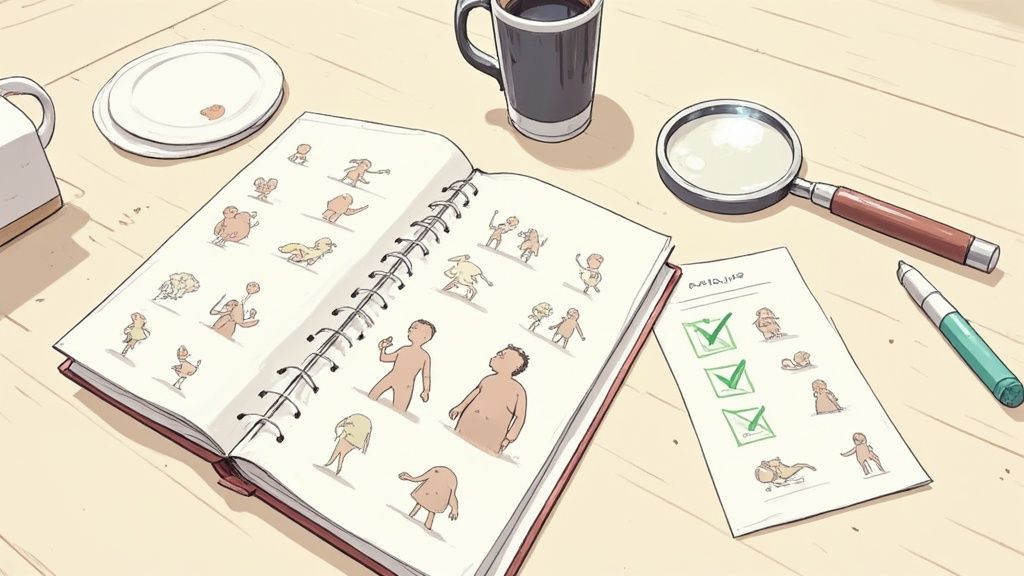
An illustrator’s portfolio is way more than their resume; it's their visual story. When you start looking through one, you aren't just flipping through pretty pictures. You need to put on your creative director hat for a moment. The real goal here is to figure out if this artist has the storytelling magic to make your book sparkle.
A great portfolio shows off more than just a cool style. It's proof of skill, consistency, and a gut-level understanding of how to tell a story with images. This is where you find out if the children's book illustrator you're eyeing can really handle bringing a whole book to life, from the first page to the last.
Look for Character Consistency
This is the big one. Seriously, it's non-negotiable. Can the artist draw the exact same character convincingly from different angles, showing a whole range of emotions, and still have it look like the same kid or creature? Hunt through their portfolio for examples of a single character shown in multiple scenes.
If a character looks like a distant cousin from one page to the next, that's a huge red flag. Kids are super sharp and will instantly feel disconnected from the story if their new best friend on page 3 suddenly has a different nose on page 10.
Evaluate Emotional Depth and Action
Static, doll-like characters just won't cut it. They leave a story feeling flat. The best illustrators are absolute masters of body language and expression—they can make you feel what the character is feeling.
As you look through their work, ask yourself a few questions:
- Can you feel the emotion? Does a happy character make you smile? Does a sad character make your heart ache a little? Look for those tiny details in the eyes, the tilt of a head, or the slump of shoulders.
- Is there a sense of movement? When a character is running, do you feel the energy? When they jump, do they look like they're actually in the air? Great action poses are what give a story its pulse.
- Do the pictures tell a story on their own? Even without any words, a powerful illustration should give you clues about what’s happening, who the character is, and what might be going on in their head.
A truly skilled children's book illustrator doesn't just draw scenes; they direct them. They make sure every character's pose, every splash of color, and every little thing in the background serves the story and grabs the reader's heart.
Assess Composition and Color
Okay, now take a mental step back and look at the whole picture. Composition is all about how the artist arranges everything on the page to guide your eye and create a certain feeling. Are the illustrations balanced and exciting to look at, or do they feel chaotic and confusing?
Color is just as crucial. A knockout portfolio will show a smart, deliberate use of color to build atmosphere. The colors should amplify the emotional vibe of the scene—maybe bright and sunny for a fun day at the park, or cool and muted for a quiet, sleepy moment. Finding an illustrator who nails this stuff is the secret to creating a book that feels professional, polished, and utterly magical.
Exploring AI and Modern Illustration Tools
The illustration world is absolutely buzzing right now, and the big question on everyone's mind is: can AI really illustrate a children's book? It's a fantastic question, and the answer isn't a simple yes or no. Think of it as a brand-new road on the creative map, complete with its own exciting vistas and a few tricky potholes.
AI tools offer mind-blowing speed and are incredibly easy on the wallet, which can be a total game-changer if you're working with a tight budget or an even tighter deadline. Seriously, imagine dreaming up dozens of visual concepts for your main character in a single afternoon. That’s the kind of power we’re talking about—it can get your story from your head to the page in a flash.
But, like any new road, this one has some bumps. The biggest debate bubbling up is about the artwork's heart and soul. A human children's book illustrator pours their life, their emotions, and their unique artistic fingerprint into every single brushstroke. They know how to capture that tiny glimmer of hope in a character’s eye or the pure, unbridled joy of a kid splashing in a puddle. That's a level of nuance an algorithm is still trying to figure out.
Understanding The AI Trade-Off
So, when you're looking at AI, you're really balancing speed against spirit. AI tools learn by studying millions of existing images, which means the art they create can sometimes feel a bit familiar, maybe even a little generic. It can lack that one-of-a-kind style that makes a book unforgettable.
Plus, you miss out on the magic of collaboration! That wonderful back-and-forth with an artist, where you build the world together, bounce ideas around, and see your vision come to life through someone else's skilled hands—that's a huge part of the fun, and it's just not there with AI.
To help you decide, let's break down the core differences in a simple table.
Human Illustrator vs AI Tools: A Quick Comparison
| Factor | Human Illustrator | AI Illustration |
|---|---|---|
| Creativity & Soul | Brings unique vision, emotion, and personal style. | Generates images based on existing data; can lack true originality. |
| Collaboration | A deep, creative partnership to build your vision. | A solo process of typing prompts and refining results. |
| Consistency | Can maintain a consistent character and world style throughout. | Can struggle with consistency from one image to the next. |
| Cost | A significant professional investment ($3,000 - $12,000+). | Very low cost, often just a monthly subscription. |
| Speed | Takes weeks or months to complete a full book. | Can generate dozens of images in minutes or hours. |
| Emotional Depth | Excels at capturing subtle emotions and storytelling nuance. | Struggles to convey deep, complex feelings authentically. |
This table really just scratches the surface, but it highlights the main trade-offs you'll be considering.
For projects where speed and a shoestring budget are the top priorities, AI is an undeniably exciting new player. But for stories that need to build a deep, lasting emotional connection with a child, nothing beats the warmth and personality of a human touch.
So, how do you pick? It really comes down to what your story needs most.
- Go with AI if: You're in a hurry, the budget is your biggest hurdle, and you just need to get some visuals on the page fast to see what works.
- Hire a Human Illustrator if: Your story is built on emotion, you want a truly unique and consistent art style, and you're looking for a creative partner to bring your world to life.
What's really exciting is seeing where these two worlds are starting to blend. Some truly innovative platforms are finding ways to combine the power of AI with the kind of personal details that make a story special. In fact, you can see how technology is making it easier than ever to create personalized story books for kids, letting them become the hero of their very own tale. It's a fantastic middle ground that offers the best of both worlds
Your Illustrator Questions Answered
Diving into the world of making your own book can feel like you've landed in a foreign country, especially when it's time to find a children's book illustrator. There's a whole new language to learn! But don't sweat it. We've got your back.
Think of this as your friendly Q&A, designed to clear up the confusion and give you the confidence to take the next step.
What Rights Am I Actually Buying?
This is a fantastic—and super important—question! When you hire an illustrator, you’re not just buying a bunch of pretty pictures. You're actually buying a license to use their artwork. The specifics of that license get hammered out in your contract, and believe me, they can vary a lot.
Here’s a quick rundown of the most common setups:
- Exclusive Rights: This is your "no one else can use this" pass. It means you're the only one who can use the art for whatever you both agreed on in the contract.
- Work-for-Hire: This is the go-to for most self-publishing parents and authors. You pay a flat fee, and in return, you typically own all the rights to the artwork, forever and ever. Simple and clean.
- Royalty Agreements: You'll see this more with traditional publishing houses. The illustrator gets a payment upfront (called an "advance") and then a slice of the pie from every book sold.
How Many Revisions Do I Get?
Ah, the back-and-forth of revisions! This is something you absolutely want to get crystal clear on before a single line is drawn. Most professional illustrators will bake a set number of revision rounds right into their price. Typically, you can expect one or two major revision opportunities during the rough sketch phase, plus a final round for tiny tweaks on the finished art.
Here's a pro tip: Always give your feedback in one clear, consolidated email. Drip-feeding small changes in a dozen different messages can really throw off the creative groove and might even cost you extra if you go beyond the agreed-upon revision rounds.
Who Owns the Original Artwork?
This one surprises a lot of people! Even if you have a work-for-hire contract and own all the digital rights, the illustrator almost always keeps the physical, original artwork. If you have your heart set on framing those beautiful, hand-painted originals for your child's room, you'll need to bring this up and get it specifically written into your contract.
It’s no wonder these details are so important. The global children's picture book market is a massive industry, projected to be worth USD 12.34 billion and expected to rocket to USD 21.68 billion by 2034. That boom supports incredible freelance illustrators who might charge anywhere from $1,000 to $10,000 for a standard book—a price that reflects the immense value of their unique storytelling magic. To see the full picture of this exciting market, you can learn more about the children's picture book industry and its trends.
At Torah Tales, we do things a little differently. We mix the magic of AI with a whole lot of heart to create one-of-a-kind illustrated books that put your child right in the center of the action. Our tech can take a simple photo of your child and reimagine them as the hero of timeless Jewish stories. Come see how you can make your child the star of their very own adventure at https://mytorahtale.com.
