


How to Play the Dreidel Game for an Unforgettable Hanukkah
Playing the dreidel game is a classic Hanukkah tradition, and the best part is how wonderfully simple it is to learn. Honestly, you'll get the hang of it in one or two spins!
At its heart, the game is all about chance. Everyone starts with a pile of goodies, puts one into a central "pot," and then takes turns spinning a four-sided top. Depending on which Hebrew letter lands face-up, you'll either win the whole pot, take half, add one of your own pieces, or simply pass your turn. It’s that easy!
Your Quick Guide to Spinning and Winning
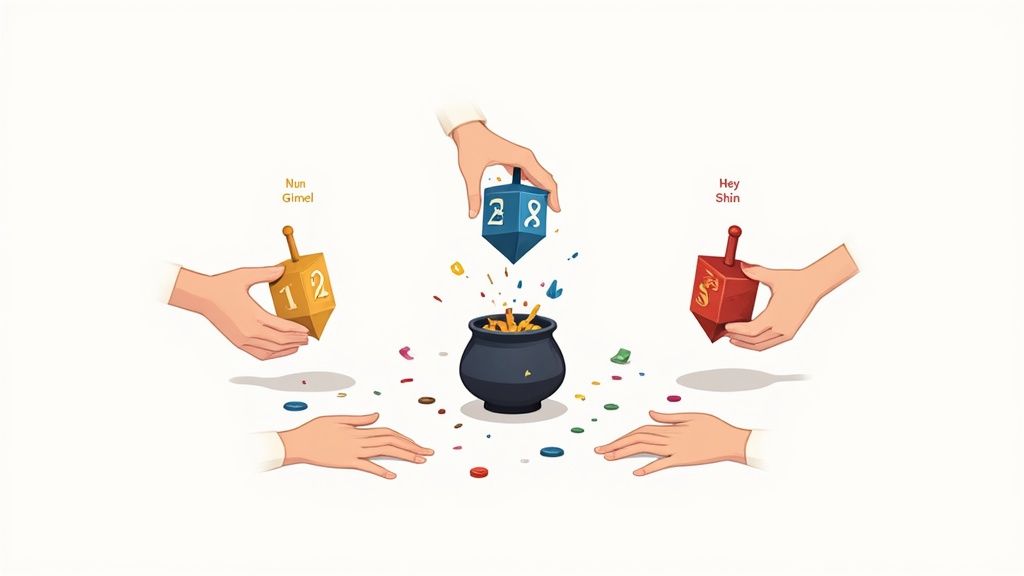
Ready to dive into one of the most fun and cherished parts of the Hanukkah celebration? You've come to the right place! Think of this as your fast track to playing dreidel like a seasoned pro. It’s a game filled with laughter, a bit of friendly competition, and a whole lot of holiday spirit.
What I love most about dreidel is how easy it is to get a game going. No complicated rules or long setup—just grab a few simple things and you're ready to play.
What You'll Need
Before you can give that first dreidel a good spin, you'll need to gather your supplies. The good news? You probably have everything you need lying around the house, especially during the holidays.
- A Dreidel: This is the star of the show! The little four-sided spinning top is what makes the magic happen.
- Game Pieces: Each player needs their own little stash of tokens. 10-15 pieces per person is a great starting point. Chocolate coins called gelt are the traditional choice (and my personal favorite!), but anything small works. Think candies, pennies, nuts, buttons, or even dried beans.
- Players: You need at least two people to play, but trust me, the more the merrier! It gets much more exciting with a bigger group.
- A Flat Surface: A smooth tabletop or a clear spot on the floor is perfect for getting a good, long spin.
The Basic Rules of Play
The core of the game is wonderfully simple. On your turn, you spin the dreidel. Whichever of the four Hebrew letters lands facing up tells you what to do next.
Each letter—Nun, Gimel, Hey, and Shin—corresponds to a specific action. You might win big, lose a piece, or do nothing at all. This simple spin-and-act gameplay is what makes it so perfect for everyone, from the littlest kids to the grandparents. You can even learn more about the history of this cherished game to share some fun facts while you play.
The real beauty of dreidel is in its unpredictability. One lucky spin can change everything! It's this element of pure chance that keeps everyone on the edge of their seats, round after round.
Setting Up Your Game for Maximum Fun
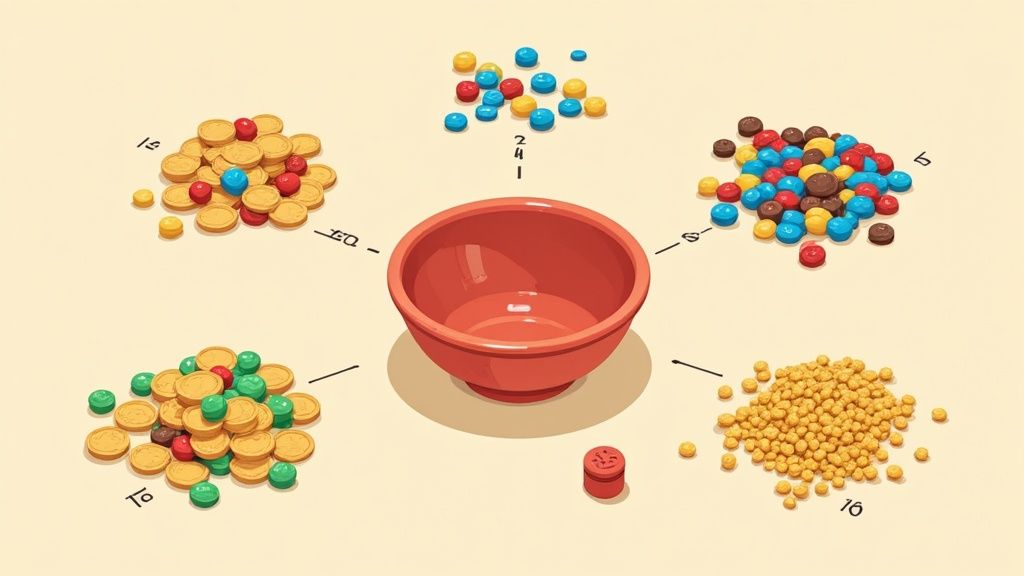
Alright, before anyone gets to spin that dreidel, a little prep work can turn a simple game into a legendary family showdown! This is all about creating that buzz of excitement before the first player even takes their turn.
First up, the loot! While chocolate gelt is the go-to classic, feel free to mix it up. This is your chance to make the game uniquely yours.
- Got a sweet tooth in the family? M&Ms, raisins, or any small wrapped candies are guaranteed winners.
- Want to skip the sugar? No problem! Shiny beads, buttons, Lego pieces, or even a stash of pennies work perfectly.
- Playing with little ones? I find that bigger, chunky items are much easier for tiny hands to grab and count.
Everyone needs their own pile to start. I've found that 10 to 15 pieces per person is the magic number. It's enough to keep the game going through a few tough rounds without it feeling like it will never end.
Setting up is about more than just supplies; it's about building anticipation. Making the "pot" a special, colorful bowl in the center of the table turns it into a prize everyone wants to win!
Last but not least, everyone has to "ante up!" Before the game officially begins, each player takes one piece from their personal stash and tosses it into the central pot. This gets the pot started and makes that very first spin feel full of high-stakes fun.
A Walkthrough of a Typical Dreidel Game
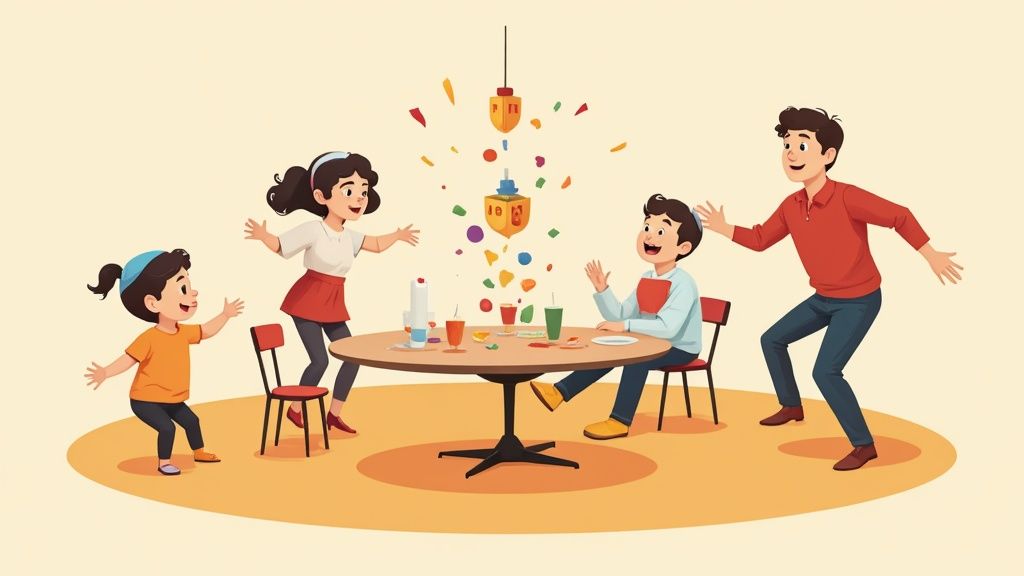
Alright, let's bring this game to life! Reading instructions is one thing, but seeing how a round actually plays out is when it all clicks.
Picture this: The Cohen family is gathered around the table, a big bowl of shiny chocolate gelt sits in the middle, just waiting to be won.
Everyone starts with 10 pieces of their own. To kick things off, each player puts one piece into the center "pot." Young Leo, buzzing with excitement, goes first. He gives the dreidel a mighty spin, and it clatters to a stop. It's Nun (נ)! Phew, nothing happens. His turn is over, and it passes to his older sister, Sarah.
Sarah grabs the dreidel and spins. It lands on Shin (ש). With a little groan, she has to add one of her own gelt coins to the pot, making it even more tempting. Now it's Grandma’s turn. With a gentle, practiced flick of her wrist, she sends the dreidel spinning. It seems to go on forever before finally landing on Gimel (ג)! The kids erupt in cheers—Grandma scoops up the entire pot!
Kicking Off the Next Round
Just because Grandma hit the jackpot doesn't mean the game is over! To start the next round, everyone (yes, even Grandma with her big pile of winnings) puts one piece of gelt back into the pot. This is called the "ante," and it’s the key to keeping the fun and excitement going!
Now the pot is reset, and the game continues. This cycle of spinning, winning, and anteing up again is the real heartbeat of dreidel. It's what creates all the laughs and suspense!
But what about those little tricky situations that always seem to come up?
A classic question is what to do when someone spins Hey (ה) but there's an odd number of pieces in the pot. The friendly house rule we always use is to round up! If there are five pieces, the player happily takes three.
Crowning a Champion
So, how does it all end? You've got a couple of great options here, and it’s always a good idea to agree on the rules before you start playing.
- Last Player Standing: This is the marathon version! The game keeps going until one person has won every single game piece from all the other players. It can get pretty epic and intense!
- Timed Game: My personal favorite for playing with little ones. Set a timer for 15 or 20 minutes. When the buzzer goes off, whoever has the most pieces is the dreidel champion! This keeps the energy high and prevents anyone from getting too tired.
Walking through a round like this, you can really feel the simple, joyful rhythm of the game. It's that perfect mix of pure luck and shared anticipation that makes every spin a little moment of Hanukkah magic.
The Surprising Strategy Behind the Spin
At first glance, the dreidel game seems like it's all about pure, simple luck. And for the most part, it is! Chance is definitely the star of the show. But there’s a fascinating layer of math hiding just beneath the surface that adds a fun wrinkle for older kids and adults.
Believe it or not, the game isn't perfectly fair—and that's actually part of its charm!
Mathematical analysis has actually shown the game has an inherent bias. This isn't a design flaw, but a quirky outcome of how the rules work. It turns out that your spot in the playing order can give you a tiny, almost secret, edge over everyone else.
The First Player Advantage
The secret all comes down to probability. It's been mathematically proven that the game ever-so-slightly favors the players who go first. The first person to spin has a statistically better chance of a good outcome than the second player, who has a better chance than the third, and so on down the line.
If you've got any math nerds in your family, you can dive deep and read the full mathematical breakdown of the dreidel game.
This creates a subtle but really interesting dynamic. Sure, a lucky Gimel can change everything in a single spin, but this hidden advantage adds a compelling strategic layer to what feels like a game of pure chance. It’s a great conversation starter for the adults at the table!
While you can't control the spin, you can influence the game's length. Planning a shorter game for little kids? Start with fewer pieces. Want an epic showdown? Give everyone a bigger pile to start!
Controlling the Game's Pace
Beyond the turn order, the only real "strategy" you have is deciding how long you want the fun to last. This is especially handy when you're planning a Hanukkah party with a mix of ages.
-
For a Quick Game (10-15 minutes): Perfect for toddlers with short attention spans! Start each player with just 5-8 game pieces. This keeps the pace snappy and the energy high.
-
For a Standard Game (20-30 minutes): This is the classic setup. Giving everyone 10-15 pieces is the sweet spot, allowing for plenty of dramatic comebacks and thrilling pot wins.
-
For a Marathon Session: Ready for a high-stakes family tournament? Start everyone with 20+ pieces. This sets the stage for a longer, more epic game where fortunes can rise and fall multiple times before a champion is finally crowned.
Exciting Dreidel Variations for a Modern Twist
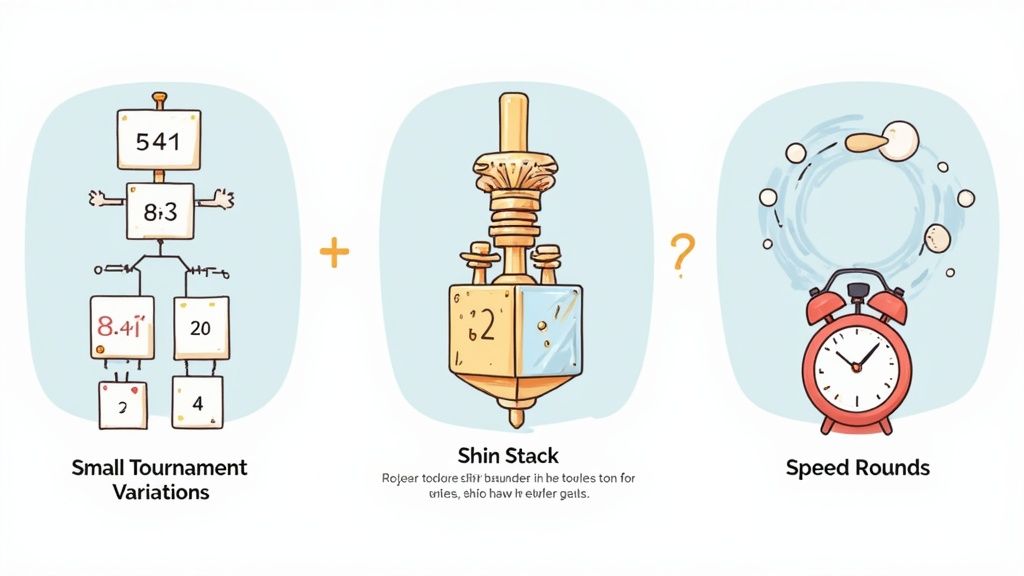
Once you’ve got the classic dreidel rules down, it’s time to shake things up! The traditional game is a ton of fun, of course, but adding a few creative twists can inject a whole new level of energy into your Hanukkah get-together. This is especially true for older kids and adults who might be craving a little more friendly competition.
One of my absolute favorite ways to raise the stakes is by playing tournament-style. A Gimel-Take-All knockout round gets everyone's heart pumping! In this version, players square off in pairs. The first person in each pair to spin Gimel wins and moves on, while their opponent is knocked out. It’s fast, dramatic, and creates some seriously unforgettable nail-biting moments as you whittle down to the final champion.
Another fantastic approach is to weave in challenges that go beyond just spinning and collecting from the pot. It’s a great way to add some new skills into the mix!
Introduce Some Friendly Competition
To get everyone even more invested, try adding a few physical or creative challenges to the classic gameplay. These small tweaks can lead to some huge laughs and amazing memories.
-
Shin Stack Challenge: This one is a classic in my house. Every time someone lands on Shin, instead of just adding a piece to the pot, they have to carefully place it on a single, communal tower. If you’re the one to make the tower fall, you have to pay a penalty of three pieces to the pot. It adds a wonderful element of physical skill and tension to the game!
-
Speed Dreidel: Perfect for a high-energy crowd! Give each player a one-minute timed turn. They spin the dreidel as many times as they possibly can within that minute, quickly following the rule for each outcome before spinning again. It’s chaotic in the best way and keeps everyone on their toes.
-
Bluffing Dreidel: For a more strategic, poker-faced game, have players hide their spin from the group and announce what they say they landed on. Anyone can challenge the claim. If the challenger is right and the spinner was bluffing, the spinner pays a penalty. But if the challenger is wrong, they have to pay up!
The real spirit of dreidel has always been about community and fun. These variations aren't meant to replace tradition, but to add new layers of joy and help you create fresh memories with loved ones each year.
The world of dreidel is always growing, and creative people are constantly coming up with new ideas. In fact, you can find entire game sets built around novel rules that add elements of speed and strategy. To see just how far the game has come, you can discover some new spins on the classic dreidel game.
Dreidel Game FAQs
Even with a game as straightforward as dreidel, some questions always seem to pop up mid-spin. Let's clear up a few of the common ones so you can keep the gelt flying and the good times rolling!
What Happens When Someone Runs Out of Gelt?
This is the big one! It's bound to happen, especially with a few unlucky spins. Instead of sending someone away from the table, most families keep the fun going with a little kindness.
A player with a mountain of winnings can always "loan" a piece or two to get them back in the game. Remember, the whole point is to have fun together!
Alternatively, the player can just sit out until that round is over. As soon as someone wins the pot and everyone antes up for the next round, they're back in business.
Why Are There Hebrew Letters on the Dreidel?
Those four letters aren't just for gameplay—they’re a tiny history lesson! The letters Nun (נ), Gimel (ג), Hey (ה), and Shin (ש) are an acronym for the Hebrew phrase "Nes Gadol Hayah Sham."
This translates to "A great miracle happened there," which is a beautiful nod to the Hanukkah story of the oil that miraculously lasted for eight days.
It’s a powerful little reminder of what the holiday is all about, right there on your spinning top.
Interestingly, if you're playing with a dreidel from Israel, you might spot a different letter. The Shin (ש) is often replaced with a Peh (פ), which stands for "Po" (here). This changes the phrase to "A great miracle happened here." Pretty cool, right?
What About a Bad Spin?
We've all seen it: the dreidel that spins right off the table or lands awkwardly against a pile of chocolate coins. What's the rule?
It's simple: if the spin isn't clean, it doesn't count. Just scoop it up and give it another go. No harm, no foul
Article created using Outrank
