

Children's Book Illustration: Unlock the magic of children's book illustration
Ever wonder what makes a children's book truly magical? It’s not just the words—it’s the art of visual storytelling that breathes life into every page, creating entire worlds that spark a child's imagination. The right illustrations are the very soul of a story, turning simple text into a treasured childhood memory.
Why Illustrations Are a Story's Heartbeat
Think back to your favorite book from when you were little. What’s the first thing you remember? For most of us, it’s not the exact words on the page. It’s the vivid, colorful images that felt like they were leaping right out at us.
That’s the undeniable power of children's book illustration! It’s the very first language a child learns to read, long before they can piece together letters and sentences.
These illustrations are so much more than just pretty decorations; they are the hardest-working storytellers in the book. They set the tone, reveal a character’s personality without a single word of dialogue, and build an entire universe for a child to get lost in. An illustration can show you the mischievous glint in a fox's eye or the cozy warmth of a grandparent's kitchen, making the story feel real, vibrant, and alive.
The Growing World of Picture Books
This magic isn't just a nostalgic feeling—it’s fueling a massive, thriving industry. The global children's picture book market is on an incredible trajectory, projected to soar from an estimated $12.34 billion in 2025 to nearly $21.68 billion by 2034.
This huge growth, detailed by Fora Insights Consultancy, shows just how much families value the special connection that a beautifully illustrated story creates. This demand keeps the field exciting and full of opportunities for authors, artists, and of course, parents looking for the next great read. You can explore more on what makes a story stick in our guide on children's picture books.
A great illustration doesn't just show you what's happening in the story—it makes you feel it. It’s the difference between reading about a magical forest and feeling like you’re actually standing among the glowing trees.
At its heart, children's book illustration is where art becomes a bridge—a bridge to empathy, wonder, and a lifelong love of reading.
2. Diving Into the Wonderful World of Illustration Styles
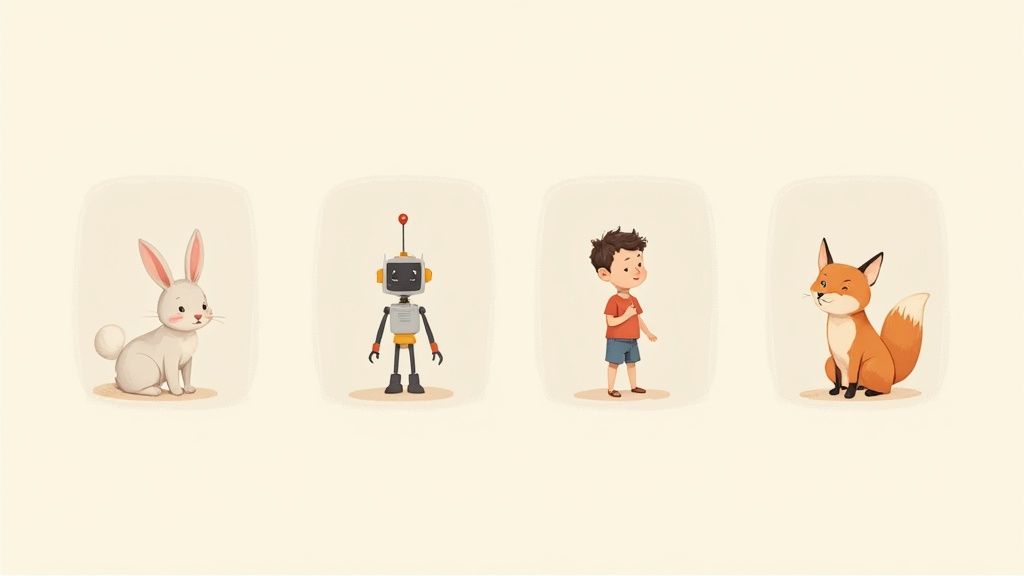
Ready to find the perfect look for your child's next favorite story? Stepping into the world of children's book illustration is like walking into a dazzling candy store. Each artistic style has its own unique flavor, and it completely shapes how a story feels.
Choosing the right one is a bit like picking the perfect soundtrack for a movie; it sets the entire mood. A soft, dreamy watercolor wash feels completely different from a bold, graphic cartoon style that practically shouts, "Adventure time!"
Let’s break down some of the most beloved styles you’ll see on the shelves.
H3: Whimsical and Watercolor
This is that classic, gentle look that so many of us remember from our own childhoods. Whimsical styles are all about soft lines, flowing shapes, and a dreamy, almost magical quality. Watercolors are a go-to medium here, creating beautiful, see-through layers that feel warm and inviting.
- What it feels like: Like a cozy hug on a rainy day. This style is absolutely fantastic for heartfelt stories about friendship, family, and the wonders of nature.
- Best for: The little ones (ages 0-5). The soft visuals are soothing and super easy for developing eyes to process.
H3: Cartoon and Graphic
Boom! Pow! Welcome to the high-energy world of cartoon illustration! This style is defined by its bold outlines, ridiculously expressive characters, and vibrant, flat colors. It’s all about fun, action, and big emotions.
This approach is brilliant at simplifying complex shapes into characters that are instantly readable and engaging. The focus is on clear emotion and dynamic movement, making it a powerhouse for visual comedy and exciting adventures.
This punchy, high-energy look is a massive hit with early readers (ages 4-8) who are drawn to its clarity and get-up-and-go spirit.
H3: Retro and Nostalgic
Have you ever picked up a book that just feels like a warm memory? That's the magic of retro styles. These illustrations borrow their charm from past decades—think of the simple, sweet character designs from the 1950s or the earthy, textured art of the 1970s. It creates a timeless, comforting feel that hits the sweet spot for both kids and parents.
To give you a clearer picture, here’s a quick-glance table comparing these popular styles.
H3: Comparing Popular Children's Book Illustration Styles
| Illustration Style | Key Characteristics | Best For |
|---|---|---|
| Whimsical/Watercolor | Soft lines, flowing shapes, translucent colors, dreamy feel. | Gentle bedtime stories, tales of friendship and nature, for toddlers (0-5). |
| Cartoon/Graphic | Bold outlines, vibrant flat colors, exaggerated expressions, high energy. | Humorous adventures, action-packed stories, for early readers (4-8). |
| Retro/Nostalgic | Inspired by past decades (e.g., 1950s-70s), limited color palettes, timeless feel. | Creating a classic, comforting mood that appeals to multiple generations. |
Of course, these are just a few examples! The art in children's books is always growing and changing.
Today, publishers and creators are also leaning into art that better reflects our diverse world. You'll see a rise in minimalist aesthetics, characters from all backgrounds, and even themes that touch on things like STEM and sustainability. You can always learn more about these illustration trends to see what’s fresh and exciting.
Ultimately, the best children's book illustration style is the one that makes a story leap off the page and right into your child’s heart. It's about finding that perfect match that doesn't just tell a story but creates an entire world to get lost in.
From First Sketch to Final Page
Have you ever wondered how those gorgeous pictures in a children's book actually come to life? It’s not just a splash of paint on a page; it’s a fascinating journey that combines wild creativity with some seriously smart planning. Think of it like a chef creating a signature dish—it starts with a brilliant idea and follows a careful recipe to get to that final, delicious result.
Everything kicks off with the creative brief and the story itself. This is where the author's words and the illustrator's imagination have their first dance. The illustrator will read the manuscript over and over, getting a feel for the characters, the mood, and the big, splashy moments that need to pop off the page. It's a time for brainstorming, doodling, and just letting the world of the story sink in.
Next up is one of the most exciting parts: character design! The illustrator starts sketching out the heroes (and villains!) of the story, playing with different expressions, quirky outfits, and signature poses until the characters feel like they could jump right out of the book. This is where a character truly takes its first breath.
Building the Visual Narrative
Once the cast is set, it’s time to create thumbnails. No, not the kind on your fingers! These are tiny, super-rough sketches of each page layout, almost like a little storyboard for the whole book. The goal isn't pretty details; it's all about figuring out the rhythm and flow of the story. Thumbnails help everyone see how the visual pacing will work, making sure every page-turn is a moment of discovery.
After the thumbnails get the thumbs-up, the illustrator creates a full-size book dummy. This is basically a mock-up of the entire book with more detailed sketches, but still not the final, polished art.
This stage is absolutely vital for teamwork. It's the best time for authors and art directors to give feedback, because changing a sketch is easy. Changing a fully painted, colored-in illustration? That's a whole different story and can take days!
The book dummy ensures everyone is on the same page (pun intended!) before the illustrator dives into the final artwork.
Adding Color and Final Touches
With the sketches locked and loaded, the real magic begins! The illustrator starts creating the final art, whether it's with watercolor, digital paint, or mixed media. A huge part of this is nailing down the color palette. The colors chosen have to match the story’s emotional journey. Think bright, cheerful yellows for a happy day at the park, or deep, moody blues for a mysterious night scene. Every color tells a part of the story.
The final stretch is a meticulous, detail-oriented process:
- Rendering Final Art: The illustrator brings each page to its full glory, carefully adding textures, shadows, light, and all those wonderful little details that make you want to stare at a page for hours.
- Text Integration: The artwork has to leave just the right amount of room for the words. The illustrations and the text need to work together perfectly, not fight for attention. We actually have a whole guide on this delicate balance—you can learn more about finding a great children's book font.
- Pre-Press Preparation: Finally, the artist gets all the digital files ready for the printer. This means making sure the colors are just right (what you see on screen isn't always what you get on paper!) and that everything meets the publisher's technical requirements.
From that initial spark of an idea to the perfectly prepared digital files, creating the illustrations for a children's book is a true labor of love, skill, and fantastic collaboration.
Finding the Right Illustrator for Your Story
So, you’ve poured your heart into a story, and now you’re ready for the magic. It’s time to find the artistic partner who will bring your words to life! This part of the journey is like casting the perfect actor for a movie—the illustrator’s vision will literally shape how every child sees and feels your world. But with so much incredible talent out there, where do you even start looking?
The good news is, you have some fantastic options, each with its own vibe. You can explore bustling online platforms, team up with a full-service creative studio, or even reach out directly to an artist whose work just speaks to you. The goal is to find someone whose style sings in perfect harmony with your story’s soul.
Where to Find Your Creative Partner
Embarking on the quest for the perfect illustrator can begin in a few key places. Think about how hands-on you want to be and what kind of support you need.
- Freelance Platforms: Sites like Upwork, Fiverr, and other art-centric communities are absolute treasure troves. You can browse endless portfolios, filter by style and budget, and connect with amazing artists from all over the world.
- Creative Studios: If you’d rather have a more guided experience, a creative studio is a fantastic choice. They act as project managers and have a whole roster of vetted illustrators, ensuring everything runs smoothly from the first sketch to the final file.
- Direct Outreach: See an illustrator whose work you just adore? Don't be shy! Many artists welcome commissions directly through their personal websites or social media. A genuine, personal message can be the start of a beautiful collaboration.
A truly great author-illustrator partnership is built on clear communication, mutual respect, and a shared obsession with the story. It’s less like hiring a contractor and more like finding the perfect dance partner—you both have to feel the music.
While children's publishing is a vibrant market for illustrators, it's not always easy. An industry report on the state of illustration highlighted that while work is steady, many artists are dealing with rising financial and mental health pressures. This is why building a fair, supportive, and respectful partnership is more important than ever. You can learn more about the challenges artists face by reading the findings from the illustration industry survey.
Understanding the Cost of Illustration
Let’s talk money. Budgeting for illustration can feel a bit like navigating a maze at first, but it’s actually quite logical once you know what goes into it. Think of it as an investment in your book’s heart and soul—because it is!
This infographic breaks down the typical creative journey an illustrator takes.
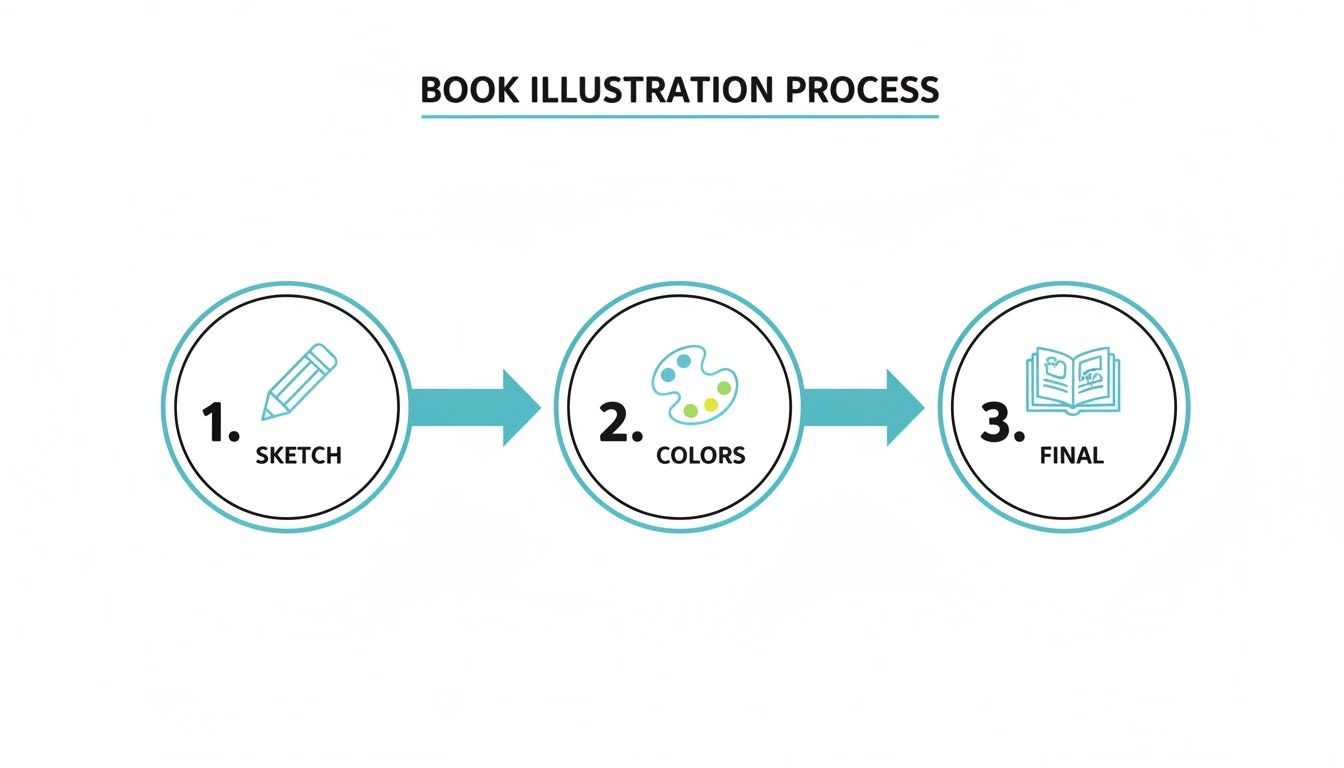
Every single step, from the first rough doodles to the final polished artwork, requires a huge amount of time and skill, and that’s what the project cost reflects.
So, what are the main things that influence an illustrator's fee?
- Experience and Reputation: It makes sense that an established, award-winning illustrator will have higher rates than a brilliant artist who is just starting out. You’re paying for their years of honed craft and proven track record.
- Style Complexity: Is the style simple and graphic, or is it a lush, detailed watercolor that takes days to complete a single page? The more time and technical skill required for each illustration, the higher the cost.
- Project Scope: This one’s straightforward—the more illustrations you need, the bigger the project. A standard 32-page picture book is a massive undertaking compared to a short story with just a handful of spot illustrations.
- Usage Rights: What do you want to do with the art? The contract will spell out exactly how you can use it. If you want broad rights—say, for merchandise, animations, or major marketing campaigns—the price will be higher than if the rights are limited only to the book itself.
Once you have a handle on these factors, you can approach illustrators with a clear vision and a realistic budget. It’s the first step toward a fantastic collaboration that will turn your manuscript into a visual masterpiece that children will cherish.
The Future: Personalized and AI-Powered Illustrations
Welcome to the most exciting frontier in children’s storytelling, where cutting-edge tech and timeless tradition are coming together to create absolute magic! We're in the middle of a wonderful shift toward personalization, where a child doesn't just read a story—they become the hero of the story. And this goes way beyond just slotting their name into the text.
Imagine your little one opening a book and seeing a character who looks just like them, ready for an adventure on every single page. That’s the incredible promise of AI-driven children's book illustration, a technology that's making stories more immersive and meaningful than ever.
How AI Creates Your Little Hero
So, how does this actually work? Think of it like a brilliant digital artist who’s also an amazing listener. The process is surprisingly simple for you, but what happens behind the scenes is incredibly clever.
It all kicks off with just one photo of your child. From there, specialized AI models get to work analyzing key facial features—the shape of their eyes, their hair color, that one-of-a-kind smile—and translating them into the book's specific art style. This isn't just a filter or a copy-paste job; the AI generates a completely new character model from scratch.
The real magic is in the consistency. The AI makes sure the personalized character looks the same from every angle and in every single scene, fitting perfectly into the illustrator's world. This creates a seamless, believable story where your child is the undisputed star.
This whole process transforms a book from a lovely story into a truly unique keepsake. The benefits are pretty special, forging a deep, personal connection to reading that can last a lifetime.
The Power of Seeing Yourself in the Story
When a child sees themselves as the main character, something amazing happens. Their engagement with the story doesn't just grow—it skyrockets! This personal connection is a game-changer for boosting reading comprehension and sparking a genuine love for books.
The emotional impact is huge:
- Boosts Self-Esteem: Seeing themselves as a brave hero reinforces a child’s sense of self-worth and capability. It’s a powerful confidence boost!
- Deepens Engagement: The story becomes intensely personal, capturing their attention and turning reading from a passive activity into an exciting adventure.
- Creates a Lasting Memory: A personalized book is so much more than a story. It becomes a cherished artifact of their childhood, a snapshot of a moment in time.
This technology is opening doors to incredibly meaningful storytelling. If you're looking for more inspiration on making a child feel seen and celebrated, check out our guide to the best personalized gifts for kids. Ultimately, this new wave of children's book illustration is all about making every single story feel like it was made just for them.
Why Diverse Representation in Illustrations Matters
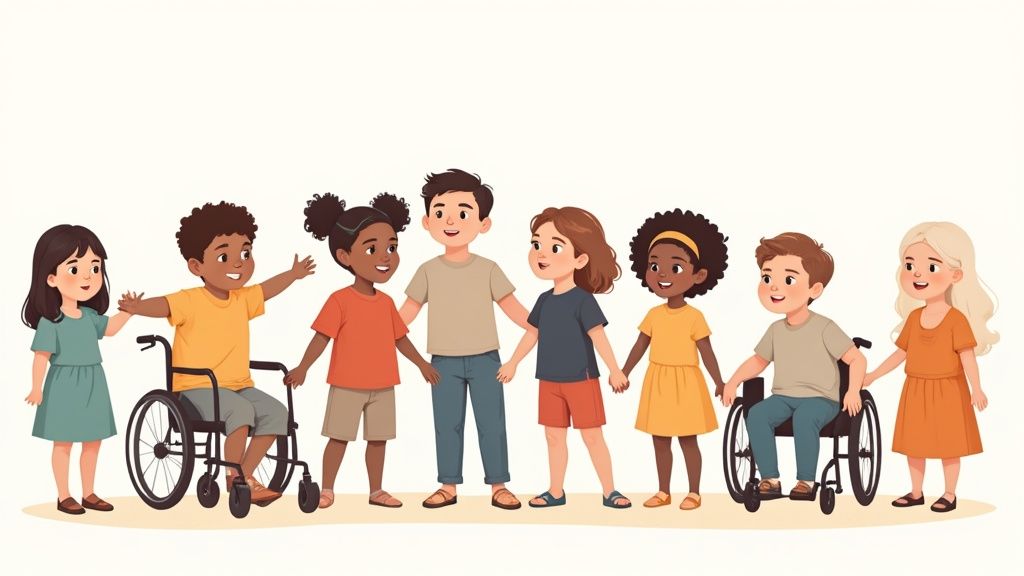
Think about it: illustrations are a child’s very first glimpse into the wider world. Long before they can decipher words on a page, they read pictures. They absorb powerful, unspoken messages from these images about who belongs, who is important, and what the world looks like. This makes the art in their books one of the most powerful influences in their early lives.
When kids open a book and see characters who look like them, come from families like theirs, or have abilities similar to their own, it sends a deeply validating message: You matter. Your story is worth telling. Seeing themselves reflected in stories is a massive boost to their self-esteem. On the flip side, never seeing anyone who looks like them can quietly suggest their experiences aren't as important.
Building Bridges with Pictures
Just as crucial as seeing themselves is seeing characters who are different. A bookshelf packed with a variety of faces, cultures, and family dynamics is an incredible tool for building a kind and open heart. These stories create a safe, engaging space for kids to learn about the incredible tapestry of humanity.
- Growing Empathy: When a child gets invested in a character from a totally different background, it helps them understand and value experiences beyond their own little bubble.
- Breaking Down Stereotypes: Authentic, positive portrayals can dismantle harmful biases before they even have a chance to form, teaching kids to see individuals, not labels.
- Creating a Sense of Belonging: An inclusive storybook world shows kids that our communities are made up of all kinds of wonderful people, which fosters a universal sense of belonging.
Inclusive children's book illustration isn't just about checking off diversity boxes. It’s about painting an honest, rich, and respectful picture of the world we all live in. It's a promise that every single child can open a book and feel both seen and welcomed.
Choosing books with thoughtful, genuine representation is one of the most meaningful ways you can shape a child’s view of the world. It helps them build a foundation of kindness, respect, and a genuine appreciation for the diverse community all around them. This is how we raise the next generation of amazing, empathetic global citizens.
Answering Your Biggest Questions About Children's Book Illustration
So, you're curious about the magic behind children's book illustrations? It's a fascinating world, and once you start peeling back the layers, a whole lot of questions pop up. Whether you're a parent trying to choose the perfect book, an author dreaming up your first story, or just someone who loves incredible art, you've come to the right place.
Let's pull back the curtain and look at the nuts and bolts of how these beautiful books are made. Think of it as a backstage pass—understanding these details will give you a whole new appreciation for the stories on your shelf.
Why Are So Many Picture Books the Same Size?
One of the first things people notice is the page count. Ever wondered why so many picture books are 32 pages long? It's not just a creative choice; it's a practical one!
This magic number comes directly from the printing process. Big sheets of paper are printed, folded, and cut into smaller bundles called "signatures." The 32-page format is simply the most efficient and cost-effective way to do it. Keep in mind, this count includes everything—the title page, copyright info, and even the endpapers. The actual story usually fills about 24 to 28 of those pages.
Who Really Owns the Artwork (and What Does It Cost)?
Once we get past the physical book, the conversation almost always turns to rights and money. These topics are super important for making sure authors and artists can work together fairly and happily.
So, who owns the final illustrations? This is a big one! In nearly all standard contracts, the illustrator retains the copyright to their artwork. The author or publisher buys a license, which gives them the right to use the art for the book and related promotions. The only time this changes is in a "work-for-hire" agreement, where the artist sells the ownership outright, which is less common and usually costs more.
This brings us to the million-dollar question—or, well, the several-thousand-dollar question: what does it cost to get a book illustrated?
The answer really depends on a few key things:
- The Illustrator's Experience: An artist with a recognizable style and a long list of published books will naturally charge more than someone just starting out.
- The Scope of the Project: A full, 32-page picture book is a huge undertaking. Prices can start in the low thousands and easily go north of $15,000 for a top-tier professional.
- The Complexity of the Style: Simple, clean line art is going to take less time—and therefore cost less—than lush, detailed watercolor paintings that take weeks to complete.
The best way to avoid surprises is to get a detailed quote that breaks down exactly what you're getting. It’s the foundation of a great partnership and a spectacular final book!
Ready to see your child become the hero of their own story? Torah Tales uses amazing technology to place your child directly into beautifully illustrated Jewish tales, creating a personalized keepsake they'll treasure forever. Create your custom book today!
